
Measuring Door Size
Before selecting a new door, it’s essential to measure the rough opening – the framed space where the door and jamb will be installed. A precise measurement ensures a perfect fit, smooth operations, and a polished final look.
How to Measure Width
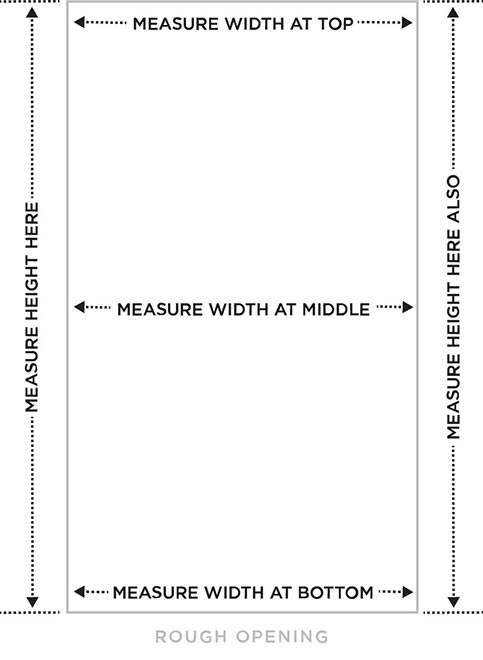
- Measure the rough opening width from the stud in three places – top, middle, and bottom
- Use the smallest measurement to ensure accuracy
- Subtract 2 inches from this number to determine the correct door width
Example: A rough opening width of 38 inches means you need a 36-inch (3/0) door.
How to Measure HEIGHT
- Measure from the floor to the underside of the upper stud at both corners of the opening
- Use the smaller measurements for precision
- Subtract 3 inches from this number to get the correct door height
Example: A rough opening height of 99 inches means you need a 96-inch (8/0) door.
Note: These measurements are using the standard jamb thickness of 3/4″. If opting for a thicker jamb application, door size will need to be adjusted accordingly.
Framing a New Rough Opening?
If you’re building a new wall frame, reverse these calculations: add 2 inches to your desired door widths and add 3 inches to your door height.
Why the Extra Space?
Rough openings are intentionally larger than the door itself to allow for:
- Precision adjustments: Stud walls aren’t always perfectly plumb and square, so extra space lets you fine-tune alignment with shims.
- Flooring clearance: Interior doors need room for carpets, wood, or tile; exterior doors require space for the sill.
- Seasonal shifts: Wood structures naturally expand and contract with humidity changes, so this buffer ensures long-term functionality.
By following these steps, you’ll see the foundation for a smooth, professional-quality door installation.